

New York City in the 1980s was gritty, chaotic, and alive with artistic possibility. Long before luxury towers and global branding transformed lower Manhattan, the neighborhood south of Canal Street was filled with abandoned commercial buildings, cheap lofts, experimental galleries, underground clubs, filmmakers, poets, musicians, and artists inventing culture in real time. I moved downtown in the late 1970s as a young photographer and aspiring filmmaker, living in a raw Chambers Street loft beneath the looming Twin Towers. The rent was five hundred dollars a month, the streets were desolate at night, and while the SoHo art world already existed, a new street culture was beginning to emerge downtown.
My loft became both home and creative laboratory. I photographed artists on the roof against the skyline, created photography projects, made experimental films with hand-cranked 16mm cameras, and hosted parties that lasted until dawn. At night, the green reflections from the World Trade Center glowed across the empty office towers. Within blocks were The Mudd Club, Area, Franklin Furnace, Artists Space, Exit Art, and countless informal gathering places where musicians, filmmakers, writers, and visual artists crossed paths. Downtown culture at the time was fluid and collaborative, built less around institutions than around shared space and improvisation. Collective experimentation was everywhere.

Photography became my way of navigating this world. As a teenager, my father had given me an old Leica and later a Nikon 35mm camera, and by the early 1980s I was documenting the clubs, streets, musicians, artists, and forgotten spaces that defined the city — from the rought streets of the Lower Eastside to the graffiti writers of the South Bronx. In 1983, I mounted my first photography exhibition at Danceteria, one of the legendary clubs of the era. Carrying a large black leather portfolio, I convinced Rudolf, the club’s owner, to give me a show in the private Congo Bill space. Together with musician and artist friends, we transformed the top floor into a hybrid environment of photography, sound, and performance. A close friend and photographer, Roger Cutforth printed the oversized Cibachrome photographs, and for two nights the room filled with strangers perusing my photographs, while an original avant-garde score composed by friends played in the background. Clubs were hybrid spaces where the boundaries between art forms could cross fertilize, which is what made it so exciting. Holly Woodlawn, one of Warhol’s superstars, sat beneath one of my photographs holding court for hours. That juxtaposition of image, performance, and personality captured the spirit of downtown itself.


Much of my work focused on the people reshaping the visual language of New York. I photographed graffiti artists including Futura 2000 (see the May 2026 SPM Cover image), Rammellzee, Phase 2, Lady Pink, Daze, and Crash for a Harper’s/Queen assignment. I went with Coco and Phase 2 into the nearly pitch-black subway tunnels and filmed them spray painting entire subway cars with astonishing speed and precision. The graffiti and hip-hop scenes overlapped with downtown clubs, experimental galleries, and alternative spaces such as Fashion Moda and the Fun Gallery, founded by Patti Astor and Bill Stelling. At a time when mainstream galleries remained overwhelmingly white and commercial, these artists transformed street culture into a radical new visual language.


Another crucial body of photographs emerged from the abandoned West Side piers along the Hudson River. The piers had been a crucial, liminal space for LGBTQ culture and a sanctuary for gay men cruising pre-Aids. In 1984, I documented Pier 34, a decaying shipping terminal overtaken by artists including David Wojnarowicz and Mike Bidlo. The ruined structure became an incubator for murals, installations, photography, performance, and queer subculture. The collapsing architecture, graffiti-covered walls, and vast river views possessed a melancholic beauty that felt removed from the frenzied capitalism of Manhattan. The work in Pier 34 carried a raw emotional intensity tied to marginality, sexuality, and resistance.

As a photographer, I was particularly drawn to artists who blurred boundaries between disciplines. I interviewed filmmaker and photographer, Wim Wenders during the New York release of “Wings of Desire” and photographed him on my rooftop as sunlight struck the Twin Towers behind him. I met Brian Eno at the Video Culture Festival in Toronto after my experimental video All Exits Final screened there. I photographed Iggy Pop in 1986 for Blitz magazine during the release of Blah, Blah, Blah. On the roof of my building, he transformed himself physically and theatrically against the downtown skyline, balancing on ledges and posing fearlessly above a sheer drop while I shot with my Nikon and handheld light meter. His openness and physical grace made him unforgettable to photograph.

The downtown scene was also deeply shaped by collaboration across media. Alongside photography, I worked in experimental film and video, often influenced by the same urban spaces and cultural tensions I photographed. Millennium Film Workshop, Anthology Film Archives, and the Experimental Television Center fostered an atmosphere of radical experimentation in analog media. My three-channel installation “Raw Zones”, shown at MoMA PS1 in 1987, combined moving image, archival material, and music into an immersive environment reflecting the anxieties of the Reagan era, militarization, and urban decay.

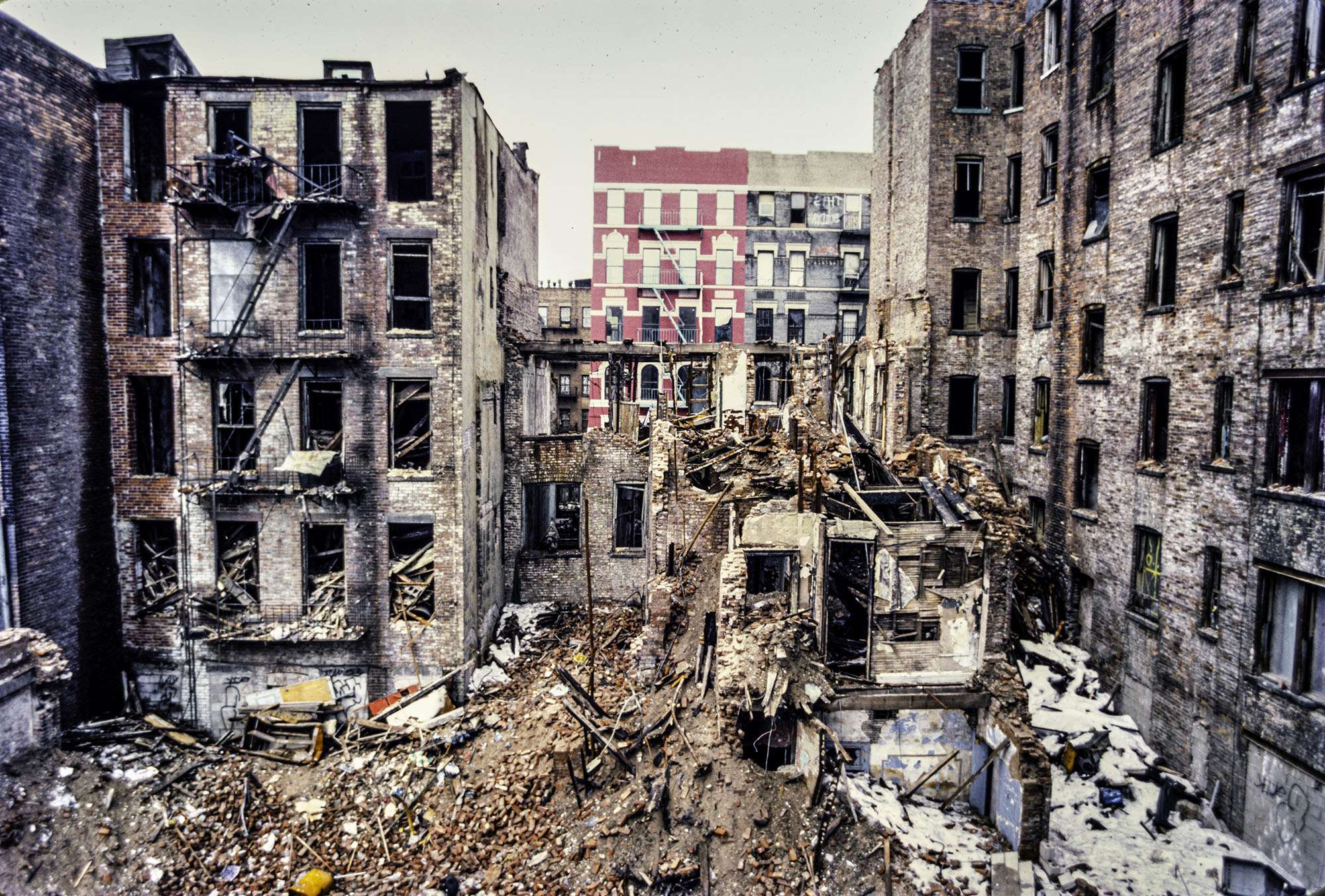
At the same time, downtown New York was increasingly shadowed by the AIDS epidemic, economic hardship, addiction, and accelerating gentrification. Tompkins Square Park became a battleground between squatters, homeless communities, artists, and developers. Empty lots, abandoned buildings, and rubble-strewn streets coexisted beside clubs, galleries, and experimental theaters.
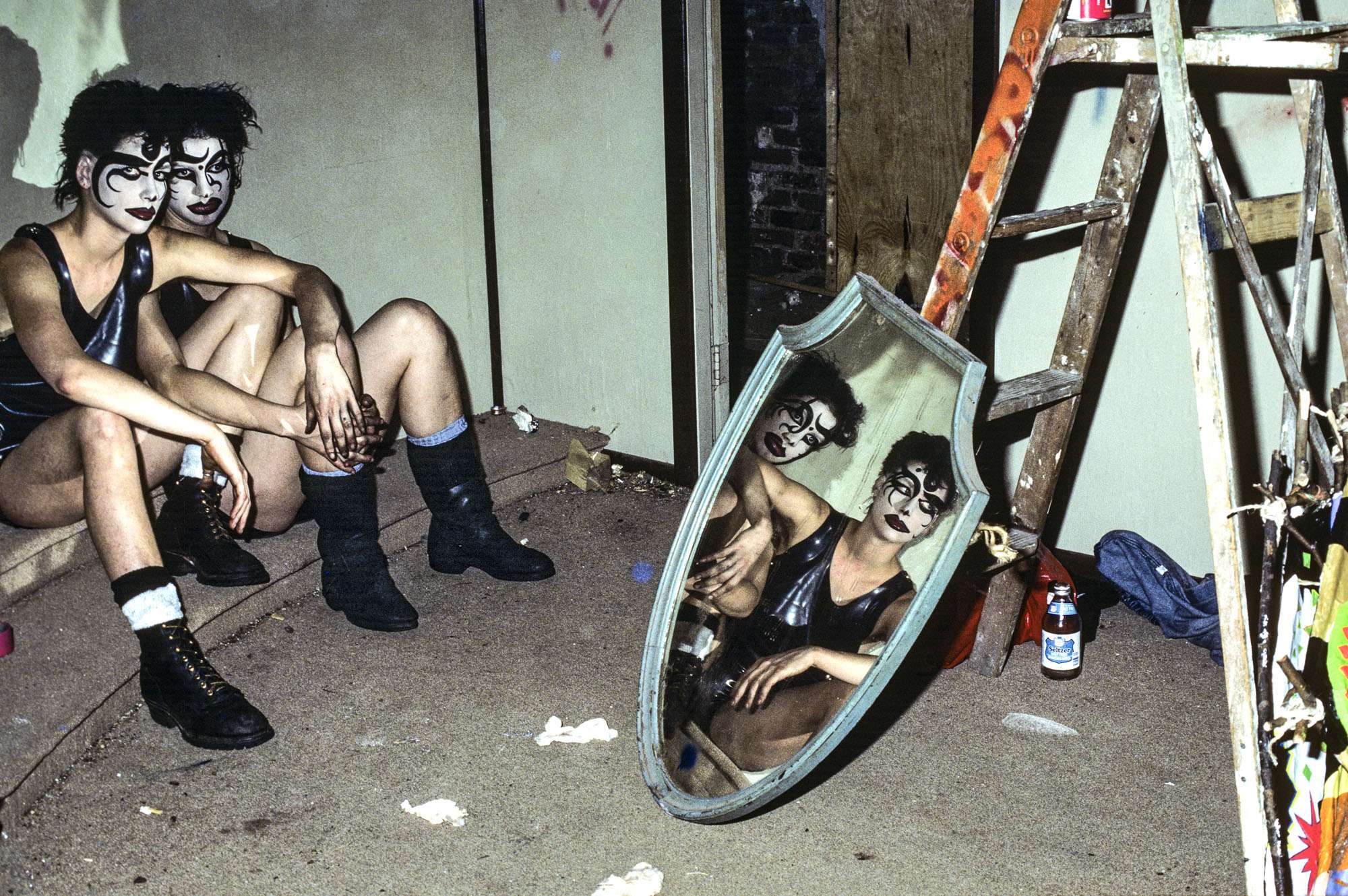
Many artists and musicians I encountered struggled precariously to survive, while others disappeared entirely. Yet despite the instability, there remained a collective sense that art mattered and that experimentation itself was a form of resistance. Looking back now, what strikes me most is the fluidity of that downtown world. Photographers, filmmakers, poets, musicians, and performers moved through overlapping communities that were still porous and accessible. The city itself functioned as both subject and collaborator. My photographs from that era are not nostalgic documents but lived experiences created from inside the scene itself. They capture a New York that was imperfect, dangerous, inventive, and intensely alive; a city where art emerged directly from the streets, lofts, clubs, rooftops, and ruins of downtown Manhattan.
Bring the Archive to Life
The Kickstarter campaign for Bethany’s project, Another Time, Another Place, a photobook drawn from her years documenting New York in the 1980s, runs until May 15th. Check it out and support the project here: https://www.kickstarter.com/projects/bjacobson/another-time-another-place-photobook-relaunch
Learn more at https://www.bethanyjacobson.com/.
